Color authority guide
Blue Gemstones
A curated, evidence-led guide to important blue gemstones, why they appear blue, how they differ, and what those differences mean for jewelry, collecting, treatment disclosure, and identification.
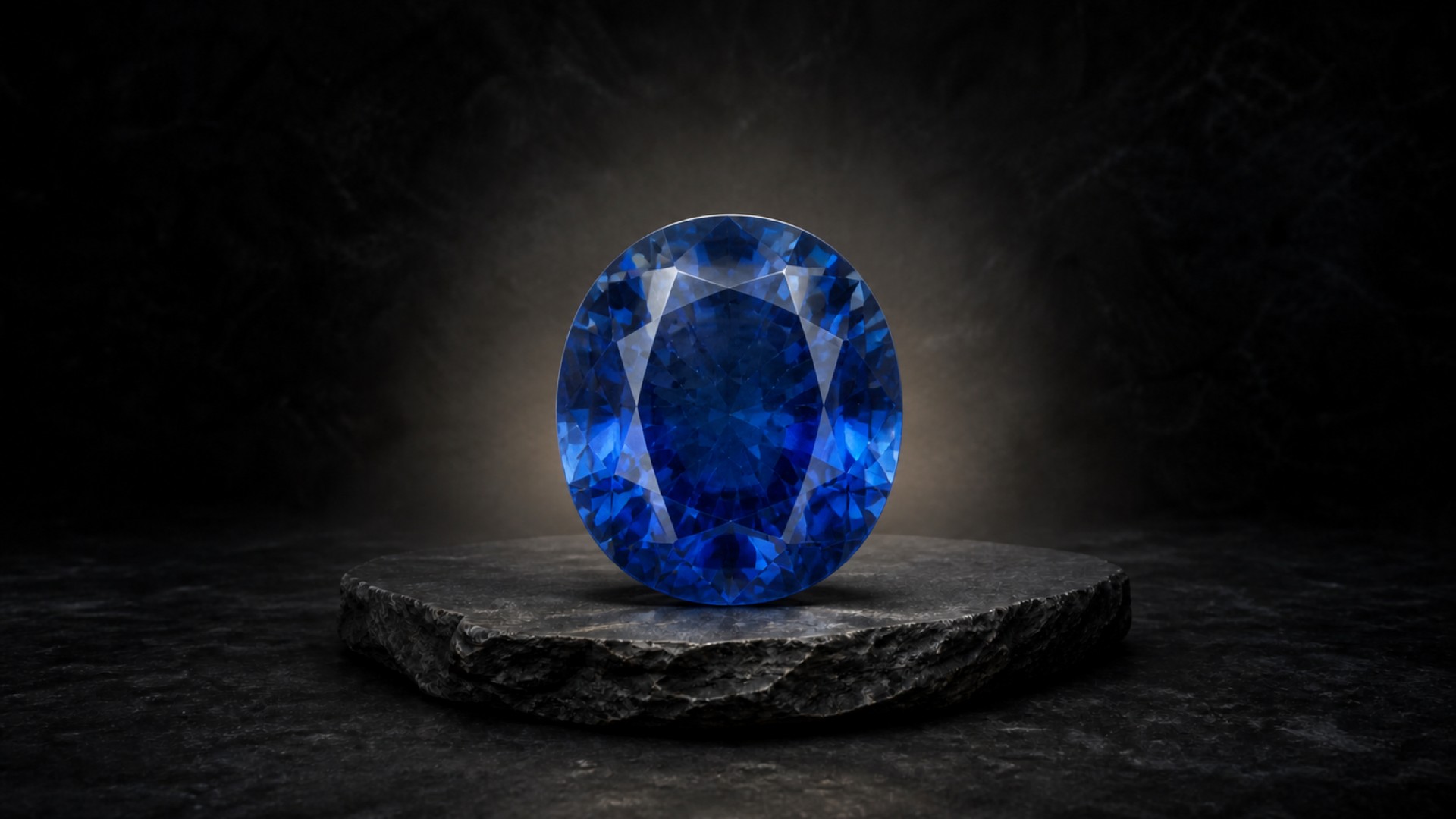
Editorial / AI illustration Existing rights-cleared editorial reference image; not documentary evidence of a specific specimen.
Quick answer
What are blue gemstones?
Blue gemstones are gem materials whose visible appearance is predominantly blue, blue-green, or violet-blue. They span different mineral species and material types, and their color can arise from different trace elements, electronic interactions, structural effects, or treatments. Color is a useful starting point for discovery, but it is not enough to identify a gemstone.
Blue is not one gemological category. Sapphire, aquamarine, tanzanite, turquoise, blue topaz, zircon, spinel, and copper-bearing tourmaline differ in mineral identity, optical behavior, durability, treatment history, and use. This guide connects those differences to live canonical records and reviewed evidence.
Curated overview
Blue gemstones at a glance
Selection is editorial. Scientific values are joined live from the canonical gemstone records and appear only with publication-eligible evidence.
 Primary example
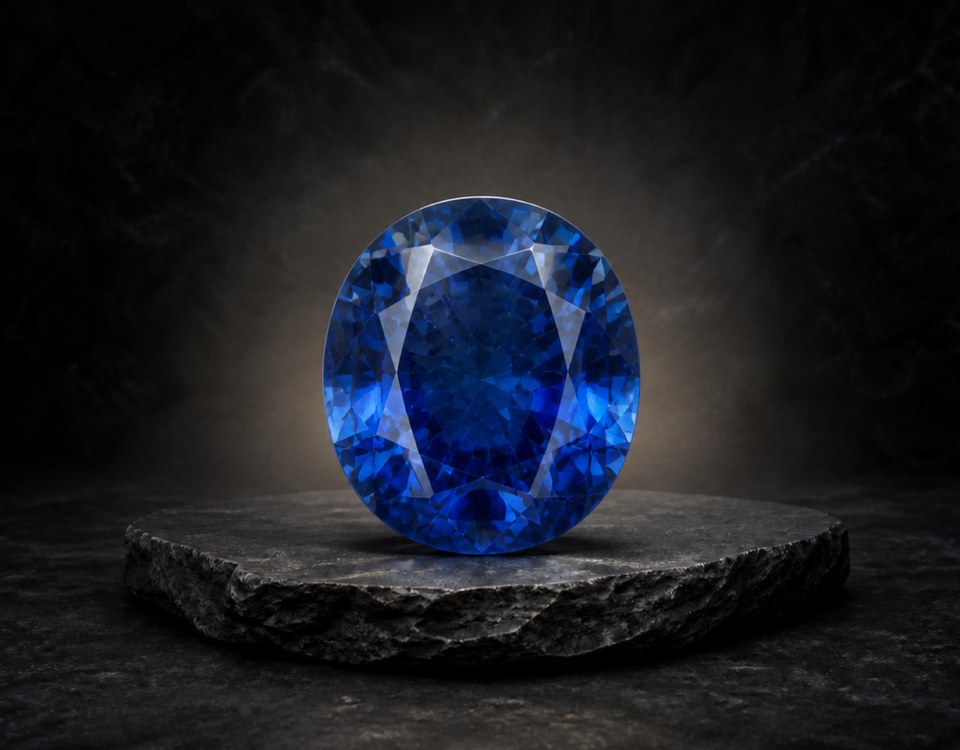
Corundum
Sapphire
Blue to violetish blueCorundum variety; the broader sapphire family includes colors other than blue.
 Major example
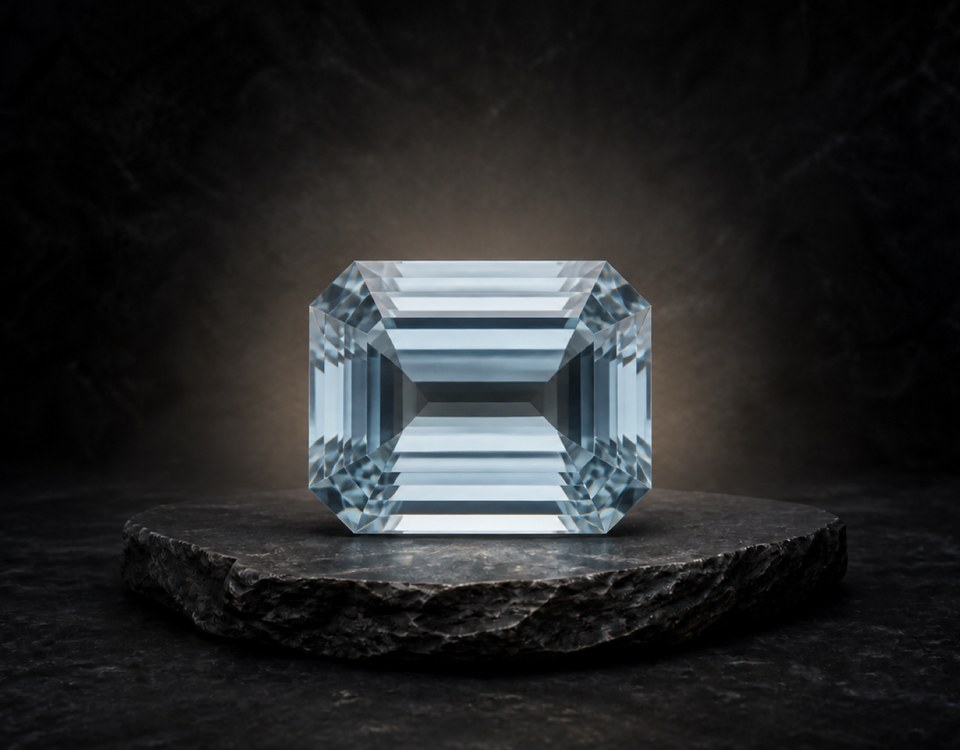
Beryl
Aquamarine
Light greenish blue to blueA blue to greenish-blue variety of beryl, often transparent and visibly different from sapphire.
 Major example
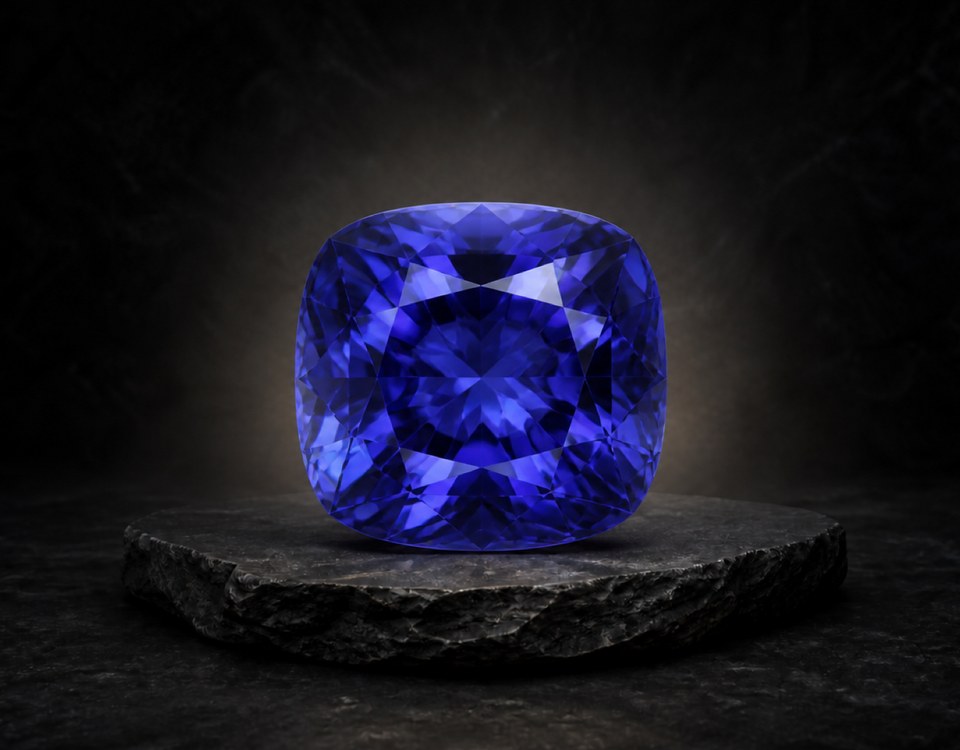
Zoisite
Tanzanite
Violet-blue to bluish violetA pleochroic zoisite variety whose appearance and durability require different guidance from sapphire.
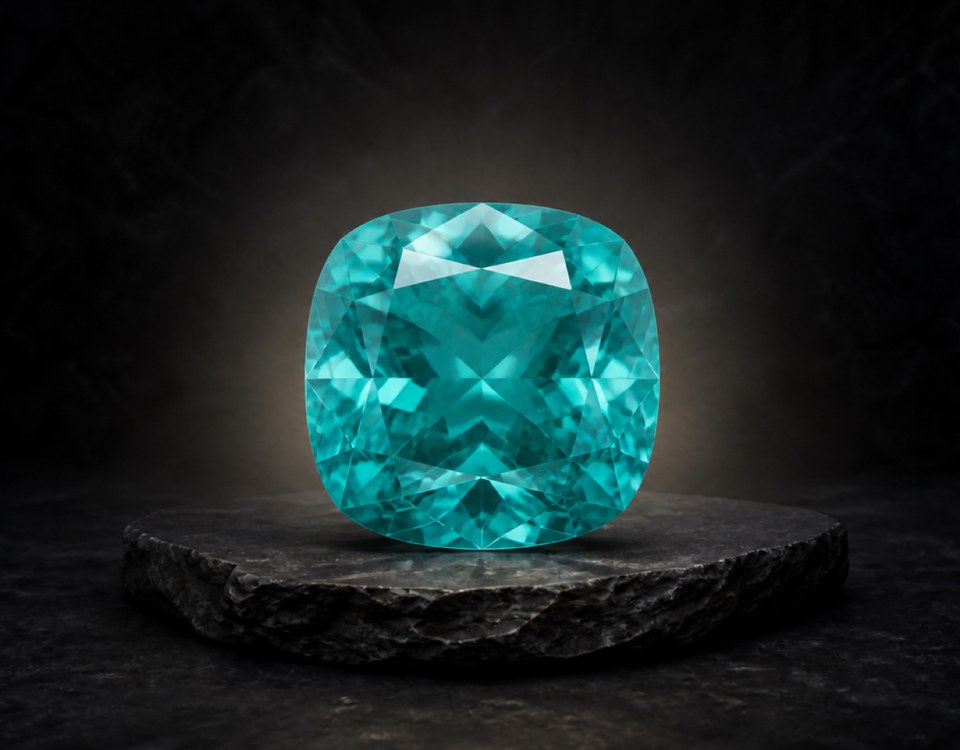 Collector example
Tourmaline
Paraíba Tourmaline
Electric blue to greenish blueCopper-bearing tourmaline; the Paraíba name is not limited to one geographic origin.
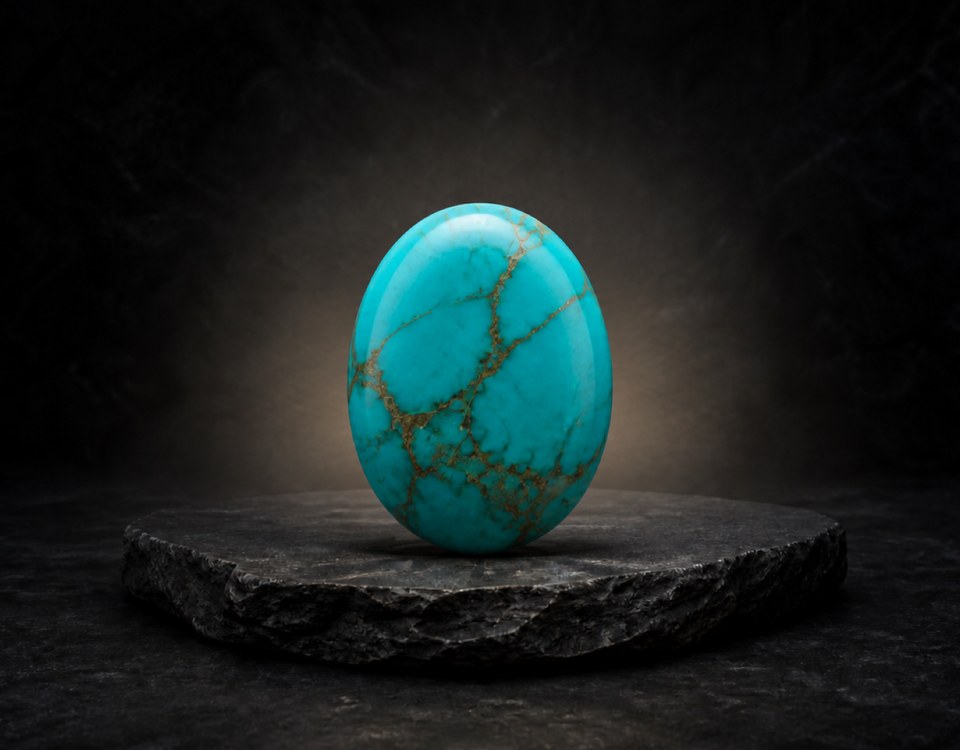 Historic and ornamental example
Turquoise
Turquoise
Opaque blue to greenish blueAn aggregate of microscopic crystals; texture and porosity affect both appearance and durability.
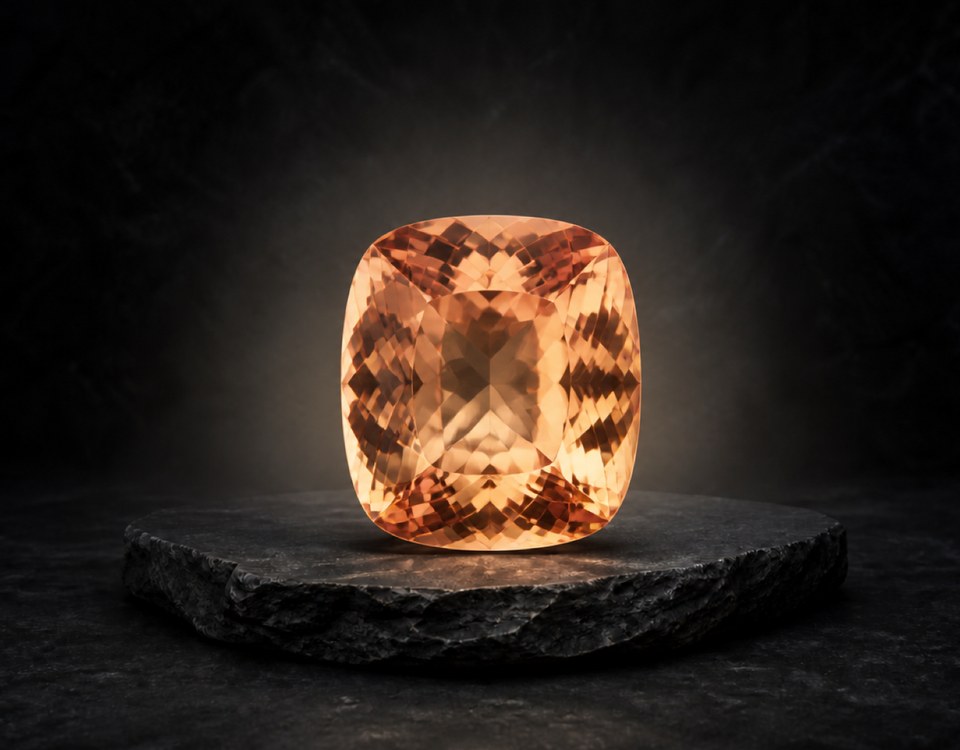 Common jewelry example
Topaz
Topaz
Pale sky blue to deep treated blueTopaz occurs in many colors. Blue material requires treatment-aware buying context.
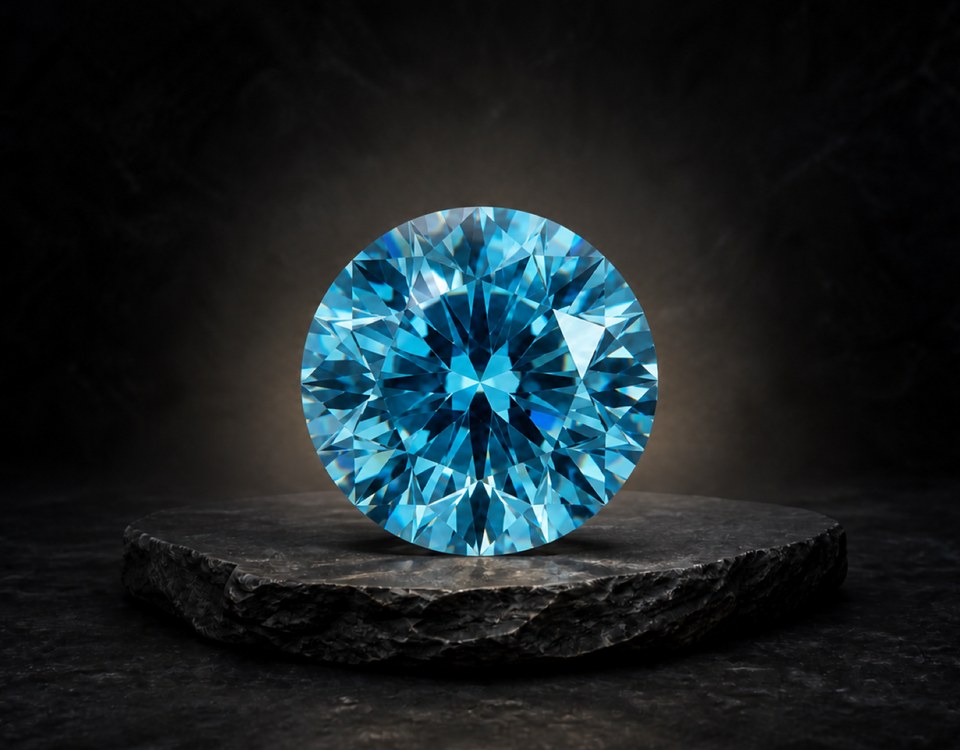 Collector example
Zircon
Zircon
Bright blue to blue-greenNatural zircon is distinct from cubic zirconia and may show strong brilliance and dispersion.
 Unusual example
Spinel
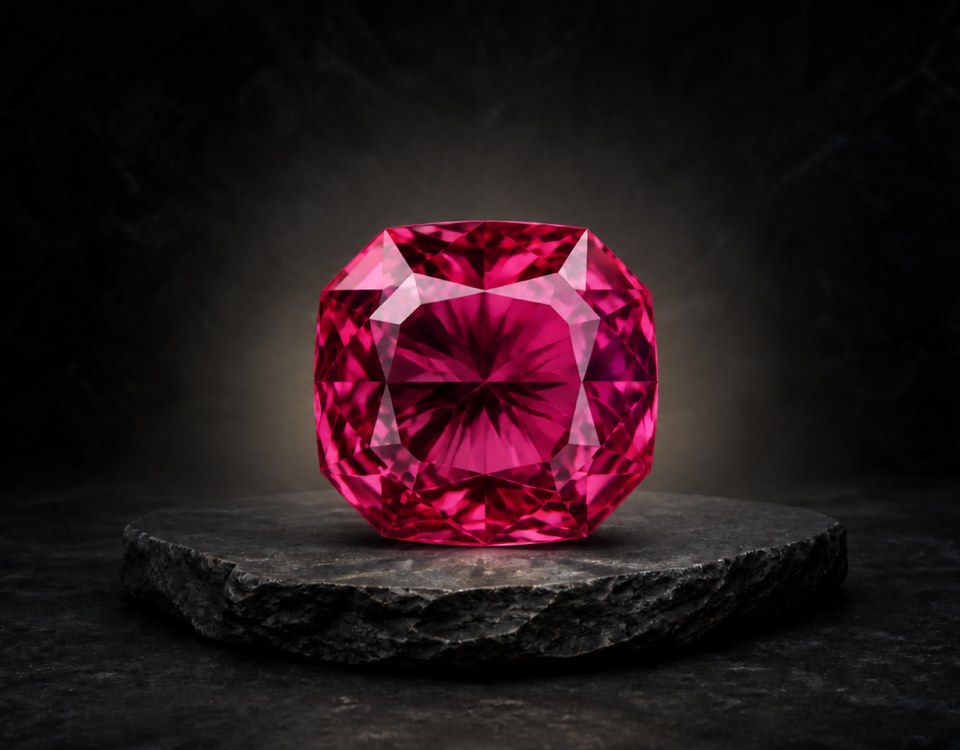
Spinel
Grayish blue to vivid blueBlue is one part of Spinel's broad color range; canonical values describe the species, not one hue.
Color science
Why Gemstones Are Blue
Blue color does not have one universal cause. Different crystal structures and color-causing agents absorb different parts of visible light, leaving blue or blue-adjacent wavelengths to reach the eye.
Trace elements can occupy sites in a crystal lattice and change its absorption. Interactions between ions can create charge-transfer color. Defects can form color centers. In some materials, treatment changes the electronic states responsible for color. These mechanisms must be described gemstone by gemstone rather than reduced to a single element. [2]
Important gems
Important Blue Gemstones
The most useful overview includes familiar jewelry stones, ornamental materials, collector gems, and unusual examples rather than every database record that can appear blue.
Blue Sapphire anchors the group through hardness and jewelry importance. Aquamarine provides the beryl connection. Tanzanite demonstrates pleochroism and cleavage-aware care. Turquoise shows why aggregates require different durability thinking. Blue topaz introduces treatment context. Zircon and blue spinel show how optical behavior and mineral identity can separate superficially similar colors. Paraíba Tourmaline adds copper-related color and naming nuance. [9] [4] [13] [20]
Mineral families
Blue Gemstones by Mineral Family
Color cuts across mineral taxonomy. Two blue stones can belong to unrelated species, while one species can produce many colors.
Sapphire is corundum; aquamarine is beryl; tanzanite is zoisite; spinel, zircon, topaz, and turquoise are distinct mineral species; Paraíba Tourmaline belongs to the tourmaline supergroup and requires species-level nuance. These relationships explain shared chemistry and structure without pretending that all members of a family are blue. [11] [4] [13]
Durability
Hardness, Toughness & Cleavage
Mohs hardness measures scratch resistance, not resistance to chipping or breaking. A jewelry decision must also consider toughness, cleavage, existing fractures, treatments, setting, and wear.
Sapphire is the hardest material in this curated group. Aquamarine, spinel, and topaz have substantial scratch resistance, but Topaz has cleavage and still needs impact-aware care. Tanzanite is softer and cleavage-sensitive. Turquoise is softer and its porosity and texture can affect toughness. Zircon spans a wider hardness range because its structure can vary. [9] [11] [7] [4] [13] [15] [14] [16]
Optics
Optical Differences
Color may overlap while refractive index, birefringence, pleochroism, transparency, luster, and dispersion differ. These properties help explain appearance and support identification.
Tanzanite can show different colors in different crystal directions. Spinel is singly refractive, while sapphire, aquamarine, topaz, zircon, and tanzanite have different optical behavior. Zircon can show conspicuous brilliance and dispersion. Turquoise is commonly opaque and is evaluated differently from transparent faceted gems. [11] [13] [16]
Treatments
Natural vs Treated Blue Color
Blue can be natural, treatment-related, or modified from an existing natural color. The correct disclosure depends on the material and treatment, not on color alone.
Heat is relevant to Sapphire and Tanzanite. Irradiation followed by heat is central to much blue Topaz production, while natural blue Topaz also exists. Copper is central to Paraíba-type Tourmaline color, and some material is heated. Turquoise can be impregnated, dyed, coated, or otherwise treated. Treatment can affect disclosure, value context, and care. [1] [13] [14] [20]
Jewelry
Blue Gemstones for Everyday Jewelry
Sapphire is the most straightforward high-wear choice in this set, but design and care still matter. Aquamarine, Spinel, and Topaz can also serve many jewelry uses with appropriate settings and expectations.
For rings, consider more than hardness: avoid exposed corners, protect cleavage-sensitive stones, ask about treatments and filling, and match the setting to the wearer. Tanzanite and Turquoise benefit from gentler use. Earrings and pendants expose stones to fewer impacts than everyday rings. [7] [4]
Buying
Buying Blue Gemstones
A responsible purchase begins with identity and treatment disclosure, then considers color, transparency or texture, cut, durability, and documentation appropriate to the value.
Ask the seller for the precise material name, whether the color is natural or treated, what care restrictions apply, and whether a respected laboratory report is appropriate. Do not assume that the darkest blue is best: tone, saturation, transparency, zoning, cut, and personal preference interact. [1]
Collecting
Blue Gemstones for Collectors
Collectors may value unusual color mechanisms, crystal form, locality documentation, treatment state, phenomena, inclusions, or mineralogical significance—not color alone.
Copper-bearing Tourmaline, fine blue Spinel, distinctive Zircon, well-documented Tanzanite, natural-color Topaz, and noteworthy Turquoise can each appeal for different reasons. Rarity language should be scoped to a variety, locality, treatment state, size, or quality and supported with evidence. [20]
Identification
Why Color Alone Cannot Identify a Blue Gemstone
Many unrelated natural and manufactured materials overlap in blue appearance. Identification requires a combination of observations and tests.
Gemologists may use refractive index, optical character, pleochroism, specific gravity, spectroscopy, microscopy, fluorescence, and other methods. Some questions—especially treatment or geographic origin—can require advanced laboratory instrumentation and reference data. [6]
Compare
Compare Blue Gemstones
The live table below is a starting point, not an identification key. It inherits canonical species, hardness, and refractive-index values only where reviewed evidence is present.
Use the individual profiles for deeper context. Curated side-by-side comparison pages will be linked only when they exist and genuinely answer a comparison intent; Sprint 8 does not auto-generate pairs to fill this section. [7]
Canonical comparison
Compare representative blue gemstones
“Under evidence review” means the hub deliberately withholds a value rather than fill a gap with an assumption.
| Gemstone | Mineral / species | Blue character | Mohs hardness | Refractive index | Editorial consideration |
|---|---|---|---|---|---|
| Sapphire | Corundum | Blue to violetish blue | 9 [9] [21] [8] | 1.762–1.77 [9] [21] [8] | Corundum variety; the broader sapphire family includes colors other than blue. |
| Aquamarine | Beryl | Light greenish blue to blue | 7.5–8 [4] [5] [3] [18] | 1.567–1.59 [4] [5] [3] [18] | A blue to greenish-blue variety of beryl, often transparent and visibly different from sapphire. |
| Tanzanite | Zoisite | Violet-blue to bluish violet | 6–7 [13] [17] [12] [19] | 1.691–1.7 [13] [17] [12] [19] | A pleochroic zoisite variety whose appearance and durability require different guidance from sapphire. |
| Paraíba Tourmaline | Tourmaline | Electric blue to greenish blue | Under evidence review | Under evidence review | Copper-bearing tourmaline; the Paraíba name is not limited to one geographic origin. |
| Turquoise | Turquoise | Opaque blue to greenish blue | 5–6 [15] | Under evidence review [15] | An aggregate of microscopic crystals; texture and porosity affect both appearance and durability. |
| Topaz | Topaz | Pale sky blue to deep treated blue | 8 [14] | 1.619–1.627 [14] | Topaz occurs in many colors. Blue material requires treatment-aware buying context. |
| Zircon | Zircon | Bright blue to blue-green | 6–7.5 [16] | Under evidence review [16] | Natural zircon is distinct from cubic zirconia and may show strong brilliance and dispersion. |
| Spinel | Spinel | Grayish blue to vivid blue | 8 [11] [22] [10] | 1.718 [11] [22] [10] | Blue is one part of Spinel's broad color range; canonical values describe the species, not one hue. |
Reviewed claims
Evidence checkpoints
Blue gemstone color has multiple causes and cannot be reduced to one trace element. [2]
Mechanism varies by material.Aquamarine is a blue to greenish-blue variety of beryl. [4]
Canonical species relationship plus institutional source.Tanzanite is pleochroic and can show different colors in different crystal directions. [13]
Appearance depends on orientation.Copper is central to the vivid blue-to-green color associated with Paraíba-type Tourmaline. [20]
The accepted name is not limited to one origin.Irradiation can create blue color in Topaz, so treatment disclosure is material to buying context. [14]
Do not infer an individual stone's treatment visually.Mohs hardness measures scratch resistance and does not by itself describe resistance to breaking or chipping. [7]
Toughness and cleavage are separate considerations.Color alone cannot identify a blue gemstone. [6]
Multiple natural and manufactured materials overlap visually.Natural Zircon is a distinct mineral and is not cubic zirconia. [16]
Name similarity does not imply identity.Knowledge graph
Related gemology concepts
Move from the color topic into the science and terminology used to understand individual gems.
Learn the gemologyMineral Species
A mineral category defined by a distinct chemical composition and crystal structure.
Learn the gemologyMohs HardnessA relative scale of resistance to scratching, ranked from 1 to 10 using reference minerals.
Learn the gemologyToughnessA material’s resistance to breaking, chipping, or fracturing when force is applied.
Learn the gemologyCleavageA mineral’s tendency to split along particular crystallographic planes where bonding is comparatively weak.
Learn the gemologyRefractive IndexRefractive index (RI) is a ratio describing how quickly light propagates in a material compared with a reference medium. At a boundary, that change in propagation speed is associated with refraction. In gemology, a refractometer reading provides a useful diagnostic property that is evaluated with optical character, birefringence, specific gravity, spectroscopy, inclusions, and other observations—not as proof of identity by itself.
Learn the gemologyPleochroismDifferent body colors observed in some anisotropic materials when viewed along different crystallographic directions.
Learn the gemologyChromophoreAn element or structural feature responsible for selective light absorption and resulting color in a material.
Learn the gemologyColor CenterA lattice defect that absorbs selected wavelengths of light and can produce color in a crystal.
Learn the gemologyGemstone IdentificationThe evidence-led process of determining a gem material by combining observations and tests.
Questions answered
Blue gemstone FAQ
What are blue gemstones?
Blue gemstones are gem materials whose dominant visible appearance is blue, blue-green, or violet-blue. They include unrelated mineral species and material types, so the category is visual and editorial rather than one mineral family.
Important examples include Sapphire, Aquamarine, Tanzanite, Turquoise, blue Topaz, blue Zircon, blue Spinel, and copper-bearing Tourmaline.
What is the hardest blue gemstone in this guide?
Blue Sapphire has a canonical Mohs hardness of 9, the highest verified value among the representative gemstones shown here.
Hardness measures scratch resistance only; toughness, cleavage, treatments, setting, and wear remain important.
Which blue gemstones are suitable for rings?
Sapphire is a strong high-wear option. Aquamarine, Spinel, and Topaz can also work in rings when their individual durability, treatments, cut, and setting are considered.
Tanzanite and Turquoise generally benefit from more protective settings and gentler wear.
Why are gemstones blue?
Different gemstones are blue for different reasons, including trace elements, interactions between ions, color centers, structural effects, and treatment.
A correct explanation must be tied to the specific material; there is no single blue-gem mechanism.
Are blue gemstones treated?
Some are and some are not. Heat, irradiation, impregnation, dyeing, coating, or other processes can be relevant depending on the material.
Treatment cannot be diagnosed from a website image. Ask for disclosure and, for consequential purchases, suitable laboratory documentation.
How are Sapphire and Aquamarine different?
Is all blue Topaz naturally blue?
No. Topaz can occur naturally in blue, but irradiation and heat are important commercial color-producing treatments.
The treatment history of an individual stone requires disclosure or testing; color alone is not proof.
Is Tanzanite durable enough for jewelry?
Tanzanite can be worn in jewelry with suitable precautions, but its Mohs hardness of 6 to 7 and cleavage make it more vulnerable to scratches and impact than Sapphire.
Warm soapy water and protection from hard blows are prudent; follow treatment-specific care advice.
Can a blue gemstone be identified by color alone?
No. Many natural, synthetic, imitation, and treated materials overlap in hue and transparency.
Gemologists combine optical, physical, microscopic, and sometimes advanced instrumental evidence.
Is Zircon the same as cubic zirconia?
No. Zircon is a natural mineral species, while cubic zirconia is a manufactured material with different composition and properties.
The similar names are a persistent source of confusion.
Evidence
References
One deduplicated bibliography supports hub-specific claims, editorial modules, FAQs, and the canonical property values displayed above.
- 1An Introduction to Gem Treatments
Gemological Institute of America
Open source - 2An Update on Color in Gems, Part 1
Gemological Institute of America | Gems & Gemology
Open source - 3Aquamarine Care and Cleaning Guide
Gemological Institute of America
Open source - 4Aquamarine Gemstone Overview
Gemological Institute of America | Gemological Institute of America
Open source - 5Beryl
Mineralogical Society of America
Open source - 6GIA Gem Identification: Introduction
Gemological Institute of America | Gemological Institute of America
Open source - 7More than the Mohs Scale: Gem Durability
Gemological Institute of America | Gemological Institute of America
Open source - 8Sapphire Care and Cleaning Guide
Gemological Institute of America
Open source - 9Sapphire Gemstone Overview
Gemological Institute of America
Open source - 10Spinel Care and Cleaning Guide
Gemological Institute of America | Gemological Institute of America
Open source - 11Spinel Gemstone Overview
Gemological Institute of America
Open source - 12Tanzanite Care and Cleaning Guide
Gemological Institute of America
Open source - 13Tanzanite Gemstone Overview
Gemological Institute of America | Gemological Institute of America
Open source - 14Topaz Gemstone Overview
Gemological Institute of America | Gemological Institute of America
Open source - 15Turquoise Description
Gemological Institute of America | Gemological Institute of America
Open source - 16Zircon Gemstone Overview
Gemological Institute of America | Gemological Institute of America
Open source - 17Zoisite
Mineralogical Society of America
Open source - 18Aquamarine, Maxixe-Type Beryl, and Hydrothermal Synthetic Blue Beryl: Analysis and Identification
Ilaria Adamo et al. | Gemological Institute of America | Gems & Gemology | 2008
Open source - 19Pleochroism in Faceted Gems: An Introduction
Richard W. Hughes | Gemological Institute of America | Gems & Gemology | 2014
Open source - 20Geographic Origin Determination of Paraíba Tourmaline
Yusuke Katsurada, Ziyin Sun, Christopher M. Breeding, and Barbara L. Dutrow | Gemological Institute of America | Gems & Gemology | Gems & Gemology | 2019
Open source - 21Corundum
Mineral Data Publishing | Mineral Data Publishing | 2005
Open source - 22Spinel
Mineralogical Society of America | Mineral Data Publishing | 2021
Open source
Last reviewed August 17, 2026 by Bob Bell. Report a correction.